
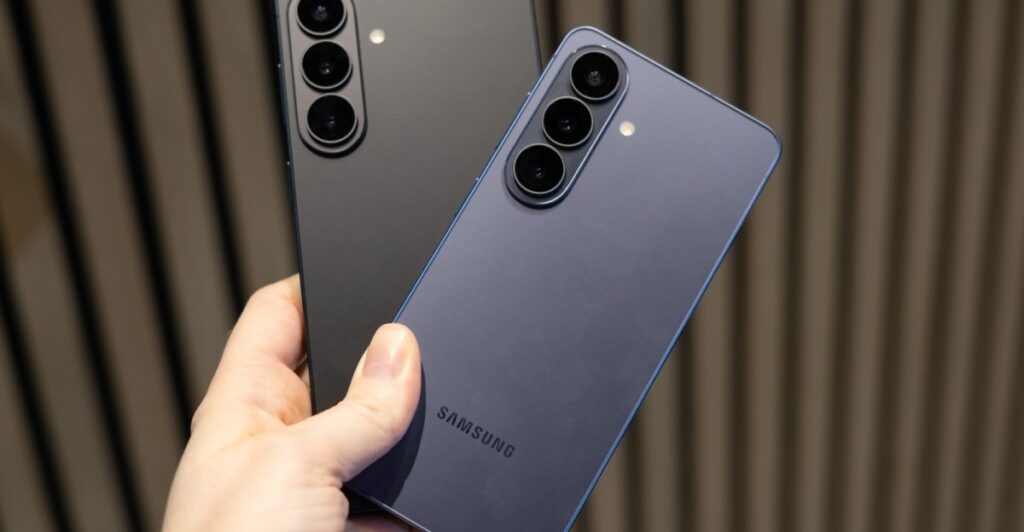
Samsung’s Won-Joon Choi, the COO of its mobile business, tells The Verge that the memory shortage alone made a “significant contribution” to the price. All the increasing material costs factored into the Galaxy S26 and S26 Plus costing $100 more than their predecessors this year, as did tariffs, but the memory was “significant,” he tells me.
The S26 does come with double the storage this year at its higher price, with 256GB rather than 128GB, though its $899 price tag is still $40 higher than an S25 with 256GB cost at launch. And though tariffs may have been a factor as well, Samsung has hiked the price in other regions too, not just the United States. The pricier S26 Ultra does come with intriguing upgrades, however, including a built-in privacy screen and the largest vapor chamber cooling system in a phone.
Samsung chip partner Qualcomm warned in its February quarterly results that it was seeing a big dip in its handset business “100 percent” due to the memory shortage, telling investors that the AI industry’s appetite for components would likely define the entire scale of the phone industry all year long.
And today, IDC is forecasting the largest drop ever recorded in worldwide smartphone shipments, a dip of 12.9 percent, across 2026. “What we are witnessing is not a temporary squeeze, but a tsunami-like shock originating in the memory supply chain, with ripple effects spreading across the entire consumer electronics industry,” writes IDC.