
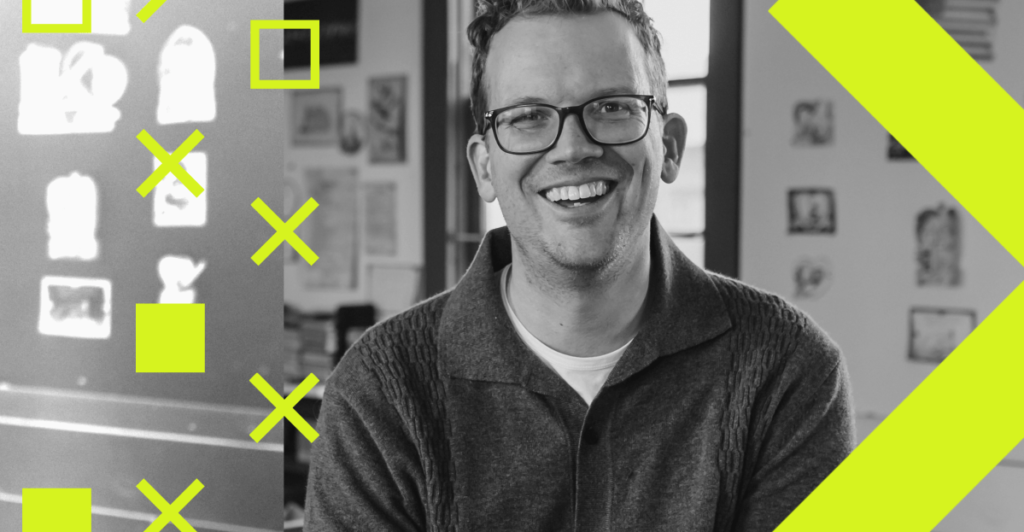
Today, I’m talking with Hank Green, a longtime friend of Decoder and the cofounder and now former owner of Complexly, an online education company he started with his brother John in 2012. I say former owner because Hank and John have just converted Complexly into a nonprofit and given up their ownership of the company in the process.
That’s some of the purest Decoder bait that ever was, because it’s all about how you structure a company and how you make decisions about changing that structure. So of course I had to bring Hank back on to talk all about it.
But in addition to being pure Decoder bait, the story of Complexly is also about media, and how any of us can look at the internet and video landscape of 2026 and try to do something meaningful and ethical with it — while still growing an audience and making enough money to survive.

Verge subscribers, don’t forget you get exclusive access to ad-free Decoder wherever you get your podcasts. Head here. Not a subscriber? You can sign up here.
If you’ve been following the Decoder or The Verge, you know I’ve been obsessed with all that for quite a while. About two years ago, Hank interviewed me for this show, and he and I talked a lot then about why I call The Verge the “last Website on Earth,” and how video has really taken over the world.
Regular Decoder listeners have also heard me tell a whole lot of CEOs and media executives that if I had to start over again now, The Verge would probably be a YouTube or TikTok channel. But starting a business on those platforms also means giving up a lot of control over your distribution, and Hank and I spent a lot of time talking about that in this episode.
Where you’ll hear Hank get particularly passionate is when he’s talking about where the money is, where it should be, and what prevents it from going there. Because it turns out there’s a lot of money sloshing around in the world. It’s just maybe not allocated to the people who are doing the work.
This was a really fiery conversation; Hank was really animated for a lot of it. I know I say you’re going to like a lot of episodes, but I promise you’re really going to like this one.
This interview has been lightly edited for length and clarity.
Hank Green, you are the often guest host of Decoder. I think you’ve hosted the show more often than I have recently. You are the co-founder and former owner of Complexly. You’re a TikTok superstar. You’re a science communicator. You’re everything. Welcome back to Decoder.
Hello. It’s always great to be here. I’m a big fan of your show.
I’m happy to have you back. One time you were the guest.
Yeah, I have been the guest before, but it was a while ago.
Long, long ago you were the guest. Recently, you’ve just been the host of the show. Some of our most popular episodes.
You guys did a great job of getting people on with me. Your staff was fantastic at giving me good questions to ask, and then I just tried to charm my way through it.
It is plug and play. Almost anyone can do it, which is not a compliment for you [Laughs].
No, I’m excited to talk to you. I’m excited to have you as a guest. It was wonderful having you as a guest host while I was out on leave. It was fun to listen to my own show as a listener for once. It’s a very unusual feeling. But I am thrilled to have you as a guest because you have done some of the most Decoder bait stuff in history to talk about, which is perfect.
I’m so excited. I was just on another podcast and it was 100 percent just talking about memes and stuff. And I was like, “Can we talk about business, please?”
Oh no, I’ve got to delete the memes section. So you and your brother, John [Green], founded this company called Complexly. I want to start at the beginning. People know you. They know John. They know the shows you make. They know your TikTok channel. They know you as internet personalities, people who make things, and creators. Do you think they know Complexly? Is that in the foreground? It’s the company that runs all this stuff.
No, not as much as I would like them to. So, usually people know the shows. They know Hank and John, and in addition to that, they know the shows. There are shows we make that have a big audience that we are not involved in and don’t host. But the fact that there’s a thing sitting underneath all of it is a little bit mysterious and also, in a way, almost anachronistic. That’s not how media works anymore. But there is, and I want people to know about it. And I think that’s starting to change.
But yeah, it’s over 70 people and we make a lot of different shows. You know SciShow, you know Eons, you know Crash Course, or you know Ask Hank Anything. You might know John Green or you might know Hank Green, but you probably don’t know Complexly. Really, part of my job right now is just to say the word “Complexly” a lot. So, let’s do that [Laughs].
This is what I mean about the Decoder bait. So you have a company.
You’ve had one for quite some time. It’s operated all these things.
Over 12 years. Yeah, 15 years.
And that company had a structure. I’m going to ask you about how you make decisions. This is going to be great.
You recently changed the ownership structure of that company. So you and John founded it, you owned 100 percent of it. Notably, you didn’t take any investment. I think there was a YouTube grant somewhere along the way.
There was an early YouTube grant.
In that period where YouTube was like, “Does anyone want to make videos? Here’s some money.”
Honestly, I think that program is considered a failure internally, but it was extremely successful if you only look at the money given to YouTubers. If you look at the money that they gave to media companies, it was a very bad investment. But if you only look at Rhett & Link, Phil DeFranco, the Fine Brothers, and Hank and John, it turns out a lot of good stuff came out of that.
I’m curious about that too. I agree with you, by the way, and Vox Media received some of that money. So it goes. But I agree with you that it kickstarted the creator economy in a very specific way, particularly on YouTube.
Complexly was your company. It started with some of that, but that was just a grant. YouTube didn’t have any ownership. It was just you and John owning the whole thing. Now, you’ve turned the company into a nonprofit. That’s a big organizational style and ownership structure switch. Talk about that for one second. What does it mean to be a nonprofit now?
I think there’s a big piece of this that is an incentive fee. Ultimately, everything in business is incentive, and there’s always been a bunch of doors open to us that feel very business. “We’ve got to turn this into a freemium product. We’ve got to create a subscription service. We should go over the top.” One of the things that Complexly has is an educational video brand that is used in pretty much every school district in America. I would say probably every school district and probably close to every school.
We have a really great relationship with teachers. Teachers love us. Students love us. Administrators don’t know that we exist because it’s free and we don’t have to sell ourselves to anybody. People watch because they want to learn even if they’re not inside of a school. So, we have this thing that we could easily leverage. This is why if you had a normal company, you would turn this into some kind of freemium model, or you would be positioning yourself to sell to an ed tech company, etc. That’s what you’d normally do.
We keep not doing that. Honestly, I think it’s held us back from developing some projects because we didn’t want to do things that would lead us too quickly or too aggressively into a business-shaped direction. One of the company’s tenets has always been that the videos should be free for everyone forever. That’s what we keep saying to people. That’s what we say to the staff internally.
So, this is really a project about impact, which means two things. One, you’re adding value if you’re reaching more people, so anything that constricts the number of people you reach is decreasing your impact. Then, how much good are you doing with the content? How much value is the content itself delivering? I think that all of our shows are doing that work, and we want to keep them all open. We want to continue competing in the online video space. We don’t want to lock ourselves up or lock teachers into using us because then it’s like, “Oh, we did it. We created the moat. We can invest less in the content, and it can be cheaper to make.” You see this happen with educational media companies.
That’s all stuff that we don’t think is a good idea. So, if we’re going to lead it this way in the long term, it can’t just be like, “Hank and John say so.” We have to create an incentive structure that’s like, “Actually, what’s the incentive structure that leads you to always be maximizing the impact rather than the revenue?” That’s really a story that’s more about… If our job is now to sell ourselves to crowdfunding, grants, family foundations, or big granting organizations, what are we going to be selling? We’re not going to be trying to lock people in. The people we’re accountable to now are our audience and they’re people who would like us to deliver value to our audience.
I think about that a lot because fundamentally, what we’re talking about here is YouTube. Complexly is mostly organized and centered in the YouTube ecosystem. There are other platforms, and they all have big audiences in different ways. But if you’re going to get value out of one of the videos that we’re talking about, you need to watch the whole thing on YouTube, not 15 pirated clips on TikTok with the vertical lines through it. I’m very curious about that whole economy, but what we’re really talking about here is YouTube.
YouTube is just under a lot of pressure all the time in a lot of different ways. It sounds to me like what you’re saying is that we should find other ways to make YouTube videos that aren’t so commercial. Because everyone else on YouTube runs into the requirements of being that commercial. As you’re saying, the incentives then start to warp the business. That’s where you get freemium and this other stuff from.
Also, I don’t think it’s hard to make good money if you have a YouTube channel that reaches a lot of people as long as you’re not spending a lot of money on the videos. I know that. I have my own personal channel that’s just me. I can make enough money to fund my life with that.
But if I wanted to make educational content that was right all the time, I needed that infrastructure, and wanted it to be classroom quality? It’s just impossible. There just isn’t a way to do that. To have brand deals in the middle of it? You can’t do that if you’re making educational videos for classrooms. You can’t cut every corner. You have to have scripted. Mostly what people are looking at is like, “How do you do low-budget, long-form content? How do you spend less time making stuff that’s longer?” That’s podcasts.
Here we are. That’s not really what we want to do. So, there’s a business model problem there. Then the other problem is the attention competition world. We want to compete in that space, but there are different areas of that. So, we would like people to use our content because they know that it’s good in addition to it being something that grabs your attention. Thus, we don’t have to be like, “what if the aliens made the pyramids,” and then use that as the leverage into teaching you about Egypt. No, that’s not the world we want to exist in.
Let me ask you about that altogether. Every time you’ve come on the show, you and I have talked about how to make money in media and how to support good work in media. That’s been a real theme of our conversations, regardless of who is interviewing who. Again, you’re the only guest where it has been the other way around.
I look at YouTube and I hear you say that you can’t make educational content there at the quality you need for the classroom, certainly not without doing brand deals. To me, this feels like the biggest indictment of this platform possible. Here’s one of the richest companies in the world. It’s going to spend another $1 trillion on data centers to build AI systems. It has so much money.
Some of those are my dollars!
They have so much money and they’ve extracted it all from advertising and from other creators. I tell this joke all the time that every YouTuber gets their wings and realizes they run a business when they get demonetized for the first time or they make the video about how mad they are at YouTube.
Have you ever had a conversation with YouTube where you’re like, “Hey, you should at least pay more per view for the good educational content”? Or has it always just been, “You’re just like everyone else regardless of what business you want to be in”?
We’ve gotten some of those things, and YouTube has done that. It stopped, but for a long time, it did do stuff like that. It was like, “We want educational content for this age range and we recognize that it’s very…” In particular, the 8 to 12 age range is a real no man’s land in terms of being able to fund content. There are more granting organizations that want to fund ages younger than that, and then there’s PBS stuff. Older than that, the kids are making their own decisions, and they’re watching MrBeast. But there’s not a lot to do in that middle area, which is an interesting problem to try and solve. So, YouTube did that for a while. Our show, SciShow Kids, was created through it giving us some money.
I’m the most biased person you can talk to about YouTube because I’ve had a really productive relationship with it over the years. It’s responded when I’ve criticized them about things. This has stopped a little bit, honestly. I criticized YouTube about not saying that it’s training AI with our content out loud but doing it. It basically said, “This is a competitive advantage. We can just pop into our license and say that we can now do this, and everybody’s going to agree with the license because it’s not like they’re going to stop uploading on YouTube. Not only are we going to use this, we have permission to use this.
Unlike all these other companies that trained on a bunch of non-consensual data, we trained on consensual data. And by consensual, we put it in the license and then everybody agreed to it because they had no choice.” Nobody even knew that was happening. I made a thing and there was basically radio silence. I think that this period, in particular, feels so ruthless and because everybody, in terms of these big tech companies, is fighting to be the one to create digital god, there’s a reason why I maybe didn’t hear back about that.
But I’ve had a pretty productive relationship. Honestly, I’ve always imagined myself running a business, and the reality is that YouTube shares a heck of a lot more revenue with me than most platforms. We get 55 percent of the ad revenue from our videos. I’m out here on Instagram and it’s like, “How are we going to build the slot machine today? We’re going to change it every two weeks. You’re never going to know how much money you make. Sometimes you’re going to make a ton. Sometimes you’re not going to make a lot. It’s going to be a randomized reward situation that’s going to make you feel like you’re playing a game that’s very exciting. Then, one day the money will just stop and you’ll have to figure it out.”
I think YouTube would probably have structured itself like that if it had figured that out sooner. I think a lot of people see the 55-percent cut as a huge blunder on its part, that it set this system up and can’t change it. I think there would be a true creator revolt if they decided that they were going to alter the way that the money is split. Although it was altered for Shorts. They were like, “Well, it’s a different piece of content and it has a different economy, and so we’re going to take a bigger cut,” for whatever that’s worth.
So, when I think of the indictment of YouTube, I think less about the creator economy, if only because it at least does better than everyone else. It lies less and seems to care more. There seem to be internal systems that are actually about surfacing creator concerns and having true advocates internally. I think that is less than it once was, just as all of the power structures in tech that can hold it accountable have weakened over the last five years and seem to be accelerating.
The thing in all of this that is much more indictable is that we ceded a lot more power than we thought when we outsourced all of our decision-making to content recommendation algorithms. That’s a really tricky thing to do well. I think that YouTube did it badly for a long time. It does it better now, but there’s still lots of… YouTube’s like, “I’ve identified that you enjoy rocket ships. Have you tried transphobia?” That’s the kind of situation going on. But it’s better than it was when Shorts first launched.
I’m curious to hear your thoughts on this, but I think in the future, we will look back on this era with the most critical lens on that everyone in society gave away their choice to select what content they watched. On YouTube, you do still make that decision. It decides what to show you. People like me are deciding how much clickbait we want to use, how many tools we want to use to attract you to our content. But on TikTok, Shorts, and Reels, we’ve given up all decision-making, and we like it. We prefer that. I think that we will look back on that as a pretty cringey activity, but I don’t know how long. Will it be 50 years? Will it be 20? Will it be 100? I don’t know.
There are product design lawsuits occurring right now about those platforms that suggest maybe it will be less than one year.
Oh, are you talking about the infinite feeds being manipulative, or something like that?
Yeah. To overcome the content moderation and First Amendment concerns, the lawsuits are about product design concerns. That’s a whole different episode. We can do that one some other time because I’m fascinated how you feel about that as a creator.
The reason I asked about YouTube, business, and rates to start with is because you mentioned the incentives of running the business and what the incentives would lead you to gain more profit tomorrow than you do today. You mentioned things like freemium models, selling to an ed tech company, building your moats, and reducing the cost of your videos, which is stuff that rapacious, capitalistic media companies do. Those are the things that they do.
Really glad we didn’t have an investor pushing us to do all this.
That’s what your investors would push you to do. That all happens if you’re not making enough money from the biggest pot, right?
No, you do it no matter what. If I was making 20 times more money from YouTube and I had investors behind me, they’d still want me to make 40 times more money.
Fair enough. The only reason I’m asking that is because I see how that works. You mentioned Instagram. I see how that works for the TikTokers and Instagrammers where the platform is paying them no money and they’ve turned themselves into QVC. Straightforwardly, that’s how those economies work.
Really what we’re looking at is like, “Well, what about the way TV worked?” The question is, did TV create higher value content? And the answer is yes. It created content that more people spent more money on and made more money making. There were more people involved in the creation. There was a more robust economy, and now there is less. What we’re looking at there if you take away the gatekeepers, if you say anybody can create, everybody will. They don’t need as much money because they just want to make things. They just want to get attention and they just want to feel important in society.
I watch this, and it’s much more intense on TikTok. People come in and they’re like, “All I want is to be heard,” and that works for six months. Then,they’re like, “But I also need to pay rent and there’s a lot of parts of being heard that actually suck.” And if you’re not a white man, you especially start to get a lot of negative consequences to posting and putting your face out there. And then you’re like, “Well, I’d like something in exchange for all of this,” and you’re trying to figure that out.
Then, the two paths that occur are you either figure out a way to make it work by diversifying across platforms and productizing — making a podcast is the big one — or you burn out. And you know who replaces you? Anybody. For six months, they’re just like, “Oh my God, somebody’s listening to me. They’re laughing at my jokes. They’re paying attention. Now I’m the person who I was watching.” Everybody wants it. But what these platforms have realized is that you could just have them last for six months and then burn through them.
There was a time when YouTube would talk about creator burnout and that has all since receded. I have this concept that there are things we are required to ignore to participate in the information economy. One of them is that the reality of the media business is competing against an army of teenagers who will work for free on Instagram.
In every conversation I have with media people, we are required to ignore that Instagram has an overabundance of supply to replace all of us at the drop of a hat. No one has any leverage against these platforms because of the army of teenagers who will work for free. If you mention it, then all that’s left is nihilism. You have to ignore it so that people can pretend that they have agency in their lives to make things.
But I think that you and I are trying to figure out what the business model looks like. It’s reflective of the… Think about how newspapers did this. There was a time when making a newspaper was extremely cheap. You could give them away for less than the cost of print because of advertising. Suddenly there was all this distribution, yellow journalism, everybody fighting for attention with the most sensational headlines and following murders. So we’re doing that. That’s where we’re at right now in online media.
Eventually something happened, and by 1980, The Wall Street Journal and The New York Times had editorial standards and a huge moat. They worked really hard to get things right all the time, so that you could trust them unlike those crappy newspapers. That’s just what’s happening? And so you and I are saying, “Vox is a brand. The Verge is a brand. You can trust us in a different way than you trust some guy on TikTok.” When I’m 20, I don’t get that, but when I’m 30, I do. When I’m 20, I don’t have money, and when I’m 30, I do. When I’m 20, I’m not subscribing to anything. I’m just watching whatever comes across my feed. And when I’m 30, I type in theverge.com, the last website on earth.
We’re going to change the domain name. It’s getting much longer: thevergedotcomthelastwebsiteonearth.com. Oddly, there are two dot-coms embedded in it. It’s bold. We’re going to do a Super Bowl ad to get people to pay attention to it.
The reason I’m starting here instead of like, “Tell me about the paperwork to be a nonprofit,” is because we’ve chosen different paths. I try to keep us off the platforms. I think the dynamics of the platforms warp us. That’s why we have a website. We’ve talked about that at length. We have a subscription now because I think people paying us directly keeps us away from the influence of algorithms, in a way.
And it sounds like — in watching your announcement video, reading your tweets, and seeing some of the coverage about being a nonprofit — that being a nonprofit for you is, in some way, insulation from what an investor would have you do to make more money on these platforms. Because if you want all the videos to be free, they have to exist on those platforms because “free” and no one watching them is not useful. Free and everyone watching them is useful.
The base level thing that we want is… You don’t have impact without reach.
And the platforms offer you reach. Then, there’s a series of incentives that the algorithms create that make people do bad things, and being a nonprofit provides you some insulation from those things.
Yes, I think so. I’m moving to being a board member rather than an owner. I think that a big thing that the board will be constructed for is to make sure that we don’t let the incentives go too far the other way, where reach doesn’t matter anymore as long as we’re making content that feels good to make. That’s a thing you’ve got to be careful about.
We want to structure it so that when we’re talking about our impact reports, we’re looking at whether we’re growing our impact, whether we’re actually reaching more people. And then… I don’t know if I should say this, but there’s so much money. It kind of infuriates me. We’ve been scraping by for every year that Crash Course has existed because we create more value than we capture. We could easily have been a company that was extremely profitable and potentially taken on Pearson. Maybe that would’ve been the thing that had a better, bigger impact on the world if we had actually taken on these existing educational media companies, hired an army of salespeople, and tried to do the thing. That’s not for me. So that’s part of it. That’s not for me. That was never going to be me.
But if what we’re talking about is impact, we are good at that. We’re good at making videos that make people curious, that capture people’s attention, that get them oriented on a thing that’s going to provide them value in the short and long term. We should like… I don’t know. Just give us money to do it. We’ll make the YouTube money that every other YouTuber makes. I’m saying this to other educational creators, too. I want them to hear this as well. Somebody should be giving you money. There should be patronage. It’s the year 2026. There is some Gilded Age-level crap going on with wealth inequality. There are people who were early at OpenAI or at Meta. There’s a lot of them, and they have too much. It’s ridiculous! Sometimes, they will say to me, “I just don’t know how to deploy it in a way that’s maximal.” And I’m like, “Sir, it’s in your bank account right now doing zilch.” Just let me figure it out for you.
And that’s a little bit how I feel. YouTube has created a pretty healthy economic ecosystem for a certain kind of content. It’s not Game of Thrones. It’s not Mister Rogers’ Neighborhood. But a certain kind of content is thriving. I know a lot of YouTubers who are professionals with really great small businesses, and they’ve slapped a lot of money into the economy in one way or the other. A lot of that has gone to creative professionals. It’s a new thing to be. It’s weird, and I think that it’s good. I think they could have been done in a way that was worse. I think it could have been done in a way that was better. But I also think that it’s 2026, and money is going to weird places.
Honestly, I would like for more people to follow our lead here. If your content is a social good, you’re not going to be a billionaire so you might as well have a good job. Maybe the thing you should do is be a charity — if you’re good at it, if you’re actually delivering value. Don’t be a charity just so you can make stuff that’s not getting any reach. Look around for people like me and support… Also, you don’t have to look at their Patreon and go, “Well, they’re asking for $50 a month. I’ll give them $50 a month.” You can send them an email and be like, “I’d like to give you $50,000.”
Get the money out of your bank account! I say this as a rich person who does this and just gave away most of my net worth. That’s what turning into a charity is. I could have sold this company for a lot of money, and I didn’t. That’s because the impact matters more to me. For clarity, I’m also fine. I’ve sold another company and things are good. So I think that people should be careful about this if they… But yeah, I don’t know.
The idea that there’s just a lot of free-floating, guilty patronage money that you can launder into science content is very powerful. Great business model. How does this work? You’re like, “I’m going to call my brother…”
“If you have a bunch of money, here’s my email address.”
No, I meant being a nonprofit. You’re like, “I’m going to call John. We’re going to be a nonprofit. I’m going to call the lawyer.” Did you e-sign it away? Was there a ceremony? Did you light a torch? How does it work?
The crazy thing is that I did print out and sign the paperwork, but after I e-signed it just because I wanted to have a copy.
I feel like I should. Every time a big thing happens like that, there should be some physical manifestation of it.
As you might imagine, it’s really lawyer-y, and one thing I know about lawyer-y stuff is I don’t need to pay that much attention. There was a lot of, “If we do it this way, then X. If we do it this way, then Y. If we do it this way, then Z.” And I was like, “Which do you want? X, Y, or Z?” rather than, “Do you want to do it this way, this way or this way?” It was outcome based.
We talked through it. We had to find a lawyer who… Turns out there’s not a lot of people who do this. Also, people often do it in ways that are about tax evasion. So, figuring out how to do it in a way where the IRS wouldn’t be like, “Are you doing tax evasion?” was important and slow. I think it’s been a year since we made this decision. Ultimately, it was about finding the right lawyers who knew how things worked and had done this before.
So you execute this decision. I ask everybody how they make decisions. What was your framework for saying, “We’re going to be a nonprofit?” What led you to this decision?
The big thing was figuring out how it was going to affect staff and affect content. How will we communicate this? Will this make sense to people? Will they feel like they’re losing something? At Complexly, we have a pretty robust profit sharing system. We’ve always said that if we were acquired, that will be reflected in the acquisition, even though we don’t have equity. There would be a similar share as our profit distribution. So, is that something that would feel like a loss to people? Is there a way to compensate people for that loss? Because the equity is no longer me and John’s, in the same way, we can never sell and people will never get a big windfall because of that sale.
Ultimately, it turned out that not many people at the company were sitting back waiting, thinking that that was going to happen someday. It’s not really a tech startup vibe because it’s a media company. It’s educational media, in particular. We had also placed a lot of constraints on the content. So I think when people look at us as an acquisition target, they were like, “Oh, you won’t put any of it behind a paywall? What if we made new stuff?” And we were like, “No, not that either.” And they were like, “We don’t really want you then.” They wanted things, but that was a real value limitation. So there’s that.
Then, there was the thought, “What are the different ways you can go here?” I’ll be honest, we took meetings with people who wanted to buy us just to get the lay of the land, and ultimately decided that was not a path we wanted to explore. We also looked at other weird ownership structures, like whether employee ownership was a thing that we could try. It just seemed like there were too many signals saying that actually, this thing should be a nonprofit organization.
Give me examples of some of those signals.
It’s not complicated. We kept offering people chances to give us money, and they took them. Even though they knew they were giving money to a for-profit corporation, they would be like, “Oh yeah, we want you to make Crash Course. We think it’s really good.” Then we’d do a fundraiser for Crash Course. We’d keep that money internally connected to Crash Course. John and I haven’t taken profit distributions in over a decade, but that money doesn’t end up coming to us. So we do these internal fundraisers, and they kept getting bigger every year. So that’s a big one.
We also get money from granting organizations that usually only give to nonprofits, but they were giving to us because they were like, “There’s not really any other way to reach the kind of people we want to reach, so we’re going to give you money even though we tend to not do that.” They were giving us signals that they’d give us more if we were a nonprofit.
The money’s out there. The real theme of this is the money’s out there if only you can catch it. How many people is Complexly now?
I wish I knew exactly. I have not been the CEO in a couple of years. I would have that exact number, but it’s definitely over 70.
And how is that generally structured?
We recently did a restructure, actually. Previously, the shows were siloed, so Crash Course would have its own graphics, editorial, and production departments. This is not entirely done yet. Maybe some silos will continue to exist, I’m not sure. But now we have an art department that does art across all of the shows. The flow between different areas of production is more open, so people aren’t always on one show forever and ever. SciShow, in particular, can be kind of a grind since it’s five, seven days a week depending on the week.
It’s not like we have seasons where we take two months off. We take two weeks off at Christmas. So, we’re getting a little more flow. Then, we have a chief development officer who is in charge of money, who oversees both brand deals and grants along with a crowdfunding component. We have a little tiny marketing department that also does merch. That’s how big the marketing department is. It’s the part of the company that markets the end product. So, we have art, production, and editorial.
I think the last time you were on the show, you were the CEO. Then, you sort of kicked yourself out of that chair and into the more nebulous role of being Hank Green.
Do you know the specifics of that story?
I got kicked off of that by getting cancer, then getting cancer treatment. I was like, “Somebody will have to be the CEO while I do this.” My brother took over at first for a couple of weeks, which is desperately not something he wanted to do but he did a great job. Eventually, our COO [Julie Walsh Smith] moved into that position. I was very on the fence at first about whether I would come back in, and then I saw how great Julie was doing and how much I enjoyed not doing the work.
Making your first deputy your boss is the greatest move of all time. That’s what we do at The Verge. I can’t recommend it enough. Everyone should do it at least once. You know what I mean? Go have that experience. It’s like Italy, make your best employee your boss. Those are the moves. They’re right on the list.
So, Julie Smith is the CEO now. When you become a nonprofit, is she still the CEO of the charity? How does that work?
I think that she stays on as the CEO. Sometimes a nonprofit has an executive director rather than a CEO, but it’s the same job. So yeah, she’s still CEO. She reports to the board. Then we’re making up a board, which is fun.
Who’s going to be on your board?
It’s very small right now. I’ve got a list of candidates. You want on?
Sure. Let’s do it. I don’t know how to be on a board. I don’t know if I’d be very helpful. I’d be like, “Is YouTube evil?” in every board meeting.
Like the one guy in media who won’t post YouTube videos [Laughs].
So right now, it’s me, Julie, and Logan Smalley. He created TED-Ed, which is a very popular TED-based YouTube channel that takes little TED talks and makes them into really great, fun, informative pieces of content that are usually animated. We’ve been friends with Logan forever. We were like, “We need three,” so we had a feeling it would be an easy yes.
We’re looking around. We’re looking for people who understand media, who understand education, who understand leadership and management, and who have contacts with rich people. So, that’s the vibe we’re going for. And there’s a lot of cool people.How big do you want that board to be?
It will either be five or seven.
So when you made this decision, you went to Julie and said, “Oh, so you’re the CEO of the company I own. I’ve just done a DocuSign. I no longer own any of it.” How does that work? How involved was she in it?
Oh, she was involved in every piece of the conversation. I think Julie was more involved than John. She definitely was, even in the decision-making process. Of course, John and I had the ability to pull on the chord, but John’s hand kind of had me and Julie’s hand on it. He was like, “Whatever you guys think is the right thing to do.”
“There, there. Push the button, grandpa.”
It’s funny. There was a moment where we weren’t sure it was possible, with different lawyers telling us different things. There was a time when we thought it might cost a bunch of money, not just that we would have a lower net worth because we’d be giving away the value of the company. We thought it would be expensive not just because of lawyer costs but because there was some kind of tax consequence where John and I would have to… Anyway, I don’t understand.
So, there was a moment like that. But once it became clear that we could do it, it just kept getting clearer and clearer. To this day, things will keep happening and I’ll be like, “Oh yeah, we should have done this. This was the right call.”
So, there’s a structure. You’re in it now. It’s a charity, and people can donate to it. They can write off the donations that they make to Complexly. A lot of rich people are always in the market for tax write-offs of this kind. You’re just in a different zone, right?
Though if you’re in the donor-advised fund (DAF) world, which is a “if you know, you know” kind of thing. We’re not inside of the DAF companies yet. It takes a little while to update. I’ve gotten a bunch of emails that say, “Why can’t I give from my DAF?” I’m like, “Well, because we did this a month ago. I don’t know. It takes a little while.”
But you’re just in a class of people who can subsidize or give to the company. They have incentive to do it because they need to harvest losses to reduce their… There’s a whole thing you can do.I think that this is just how we work as people, but there’s a sense that if rich people are giving away money, it’s because they get some kind of benefit. Just for clarity, they don’t get more money when they give money away. They just are able to give away more money because it’s tax deductible. So, if I give away $50,000 and I’m paying a 30 percent tax rate, then I otherwise would’ve been able to give $38,000 or… I can’t do the math. This way, I can give more without that money going to the government. You can question whether we should let people decide where money that would otherwise be going to the government goes.
This is crazy. I actually know a billionaire who has plenty of money, but is like, “I don’t think that I should decide whether or not my tax dollars go to the government. I think that the government should decide what to do with my tax dollars.” And that’s a fascinating way of looking at it, but that’s not how much people —
Is this person European? Because I don’t know–
No, he is American and you know who he is.
Yeah. He’s very American. He’s like the most American of them. He likes America.
We’re finally going to make a viral TikTok clip and it’s just going to be people trying to guess who this person is. It’s John Wayne!
Who’s a man that you’ve heard of.
Who’s so American that–
Who actually likes America and is kind of in favor of government?
The structure of the company can now accept this new income stream from billionaires who want to give you the money. That takes you into a new category.
For clarity, it’s mostly people who have like $10 million.
But still, a new door has opened. There’s a new line of revenue for the company because you have the structure. You’ve created the incentives so that you’re not just rapaciously chasing growth at all ends. You’re not doing, “Is the Earth flat?” That’s a thing you can do on YouTube to make a lot of money. It’s a thing you can do on every platform.
Honestly, I should probably do that. I should make, “Is the Earth flat?” I should just be like, “Here are all the reasons why.”
I had an AI researcher tell me that they can’t convince AI that the Earth is flat. That actually made me feel good.
We should shut it down now. No more data centers needed.
Actually, I want to come to AI. The reason I’m just laying this all out is because you have a new source of revenue that changes your incentives. It changes who you were “working for.” It’s those people who want to see this work in the world. You still have this idea that you need to get reach on the platforms because you want to have impact. And right next to that is not only the army of Instagram teens who will work for free but the enormous tidal wave of slop that these platforms are creating themselves.
YouTube launched songs on YouTube Shorts yesterday. I watched a clip of my interview with the founder and CEO of Ring, and YouTube just made a song about surveilling dogs. I pushed a button, and then there was a song about surveilling dogs that I could just publish to YouTube. I’m still emotionally processing this experience. I don’t know what just happened to me. I don’t know what kind of creator I am anymore. I know that that song about surveilling dogs is kind of hot, like a lot of feelings all at once.
How do you think about that? You now have a little bit of insulation, both from the incentives of capitalism and from the need to make money because there’s a new donor class unlocked. If you want to have all this impact, how do you think about, “Okay, now we have to go fight this slop machine?”
We have to compete with what exists. I find myself not that worried about it.
Not about the slop. I’m worried about AI. I’m worried about AI in a bunch of different ways. The biggest thing I’m worried about is that every time something big happens with AI, no one thought that it was going to happen. Everybody thought we were going to fall in love with AI, but nobody thought it was going to be so nice to you that you’d go crazy. Nobody predicted AI psychosis, like sycophancy-induced psychosis. That keeps happening. So, I think we’re focused on the wrong problems. The thing I’m mostly worried about is that it’s going to be bad in a way that we don’t predict, which is exactly what happened with the social internet. That won’t be a surprise, but whatever it is will be surprising. So, I’m worried about society.
Here’s what I think, and I might be wrong. Coming into it from the side, why is slop slop? I think because it’s easy to make. When I look at a website that was made with Lovable and it’s a good functional website, I don’t think that’s slop. The reason is that there were a bunch of human decisions that went into it, and there was a bunch of hard work that went into it. They didn’t go into the lines of code, but they went into the design, into imagining the user interface, into imagining user behavior, into imagining how to best get an idea into my head. I’m like, “This was a tool used to aid human creation.”
When I think about what slop is, it’s like, “You typed a prompt in and then you posted it.” Now, there’s a video of a baby saving a cat from a bear. People think that’s real and all you did was say, “Make a video of a baby saving a cat from a bear. Make it look like it came from a Ring cam,” and then you got 10 million views on Reels. That’s slop because it’s a low effort.
Remember when OpenAI first launched its image generator, and it was always using the same font, it was kind of yellow, and the characters all looked the same? You became able to identify what those looked like in three. You saw three of them and you were like, “Now every time I see one of those, I will know what it looks like.” I don’t know if digital god is coming, but until he does, I think that’s going to be true.
I was just listening to some AI guys who are in the coding world talking about this on a podcast. One of them was like, “What do you think is the thing to be doing now if you’re in tech?” They were like, “What we know is that plumber’s jobs are safe.” But then he started inarticulately listing a bunch of things and said, “I don’t really know what to call this.” What he was describing was the liberal arts. He was like, “You need to be able to understand people, communicate with each other, understand behavior, know what’s culturally resonant, know where we are right now in the history of art, and write good copy.” So what you’re saying is we should all go to liberal arts school?.” And the last 20 years of everybody saying we should go STEM was a huge mistake [Laughs]. It was a huge mistake. I happen to live in a town with a two-school university system that’s mostly in Montana. There’s the liberal arts one, the University of Montana, which has been suffering. Then there’s the more tech one, Montana State, which has been thriving. And I’m like, “We’re going to get them. Those Bobcats are in trouble now.”
It’s time. It’s time to be English majors once again.
So, there’s a piece of me that thinks we get it. We get human labor. When there are great products made with AI, they will be great because a lot of attention was poured into them by humans. It turns out figuring out how to structure your database wasn’t that important. What was important was making something beautiful and useful. They still won’t be able to do that. I feel like that might be a somewhat stable circumstance.
I’m not saying that will be the case 100 years from now, but I think that will be a somewhat stable circumstance for a while where we’re actually making something good. This is the other thing. If it’s cheap and easy to make, everyone will be making it, and we will immediately rebel against it because that’s how art works. When the stuff becomes commoditized, it’s a commodity and we don’t love it anymore.
I’m going to complicate this in three distinct ways. First, I’m going to agree with you. There are a number of CEOs who come on the show and say, “Yes, I’m a billionaire because I made a view of a publicly available database that you could look at on your phone.” I’m like, “Yeah, what are you going to do when the AI reads the database for you?” They’re like, “Good question.” That’s every other episode of the show at this point. So, I agree with you there. There’s something about that where we’re changing how that whole economy works.
The part where everyone is going to understand that they’re looking at the AI slop and then make another choice is complicated by your own thesis at the beginning of the show, which is that we have ceded control. I can’t tell TikTok, “Don’t show me the slop.” I absolutely cannot tell Instagram that. Every minute that someone spends watching a cat doing the Electro Breaker dance — and I’ve spent a lot of those minutes, my man — is a minute I’m not watching you. That is a zero-sum game, and it’s hard to institute that choice.
I don’t think there will be none of it. I think that it will be a kind of content, and it will not be the kind of content that people will want to watch. They will watch it sometimes in the same way we watch dash cam videos and car accidents. We’ll watch it and maybe we won’t even know we’re watching AI most of the time. In particular, I think this will happen on short-form, swipeable platforms. When it comes to a video that has an AI voice reading an AI script with AI slow zoom photos on top of it, I think you have to be a little brain rotted to watch two of those. I actually want somebody with a perspective who’s making something with an understanding of what compels me.
Have you seen the videos where Moses is a vlogger crossing the Red Sea and he’s like, “What’s up, fam?” That stuff will not go away. They’re just going to make more and more of it. That’s slop in its way. It is a different brand of slop.
It’s slop in its way. There is a vibe there that somebody had a clever idea. This is what I think. As humans, we will actually be uniquely good at being able to tell when somebody had a good idea and used a tool to create a thing that otherwise wouldn’t be possible. I do hold out this hope that what is happening right now is similar to when people decided that they couldn’t enjoy newspapers that lied to them anymore.
They sought out structures and companies thrived building structures that promised a better product. I think that a very select few of legacy institutions will make it through that transition — maybe one. I think maybe five. Newer organizations will build up in their place and figure out how to make that promise in a way that people will believe.
There’s a reason I am always yapping about our ethics policy. I literally think the kids don’t know that we make things according to a process.
The process is actually the thing you buy from us. The outcome of the process is kind of secondary.
I think even people who make content in that space don’t understand what journalism is. Some of these TikTok, journalist-type people don’t understand what journalism is. They think that news comes from the Associated Press (AP), and that’s where it comes from.
It’s an ever present fire hose.
There’s a news plug that the AP plugs into that delivers them the news, and then people say the news.
I said there was going to be a third way, that I would complicate this for you.
The third way that I think all this gets complicated is, I watch my 7-year-old daughter argue with Google on our Google Home Hub about space. I think that she wants to prove to Gemini that she knows more about space than it does. I’m like, “This is the best use of AI that has ever existed.” This is what I want. She’s in a fight with a machine that will never get tired. It’s the Terminator for space facts, and she’s motivated to prove to it that she knows more about space. Sometimes she learns things about space, sometimes she doesn’t. Who knows what’s happening. But it’s a totally different approach to learning.
There are other companies that are chasing that approach. Actually, when you hosted the show, you had Sal Khan from Khan Academy on. This is its big bet. They’ve also organized a nonprofit, but this is its big bet on a new way of meeting people where they are. That’s the other thing that’s going to take time away from these platforms.
How do you think about that? So many CEOs come on the show and the platform shift is, on the one hand, it looks like maybe no one’s ever going to write software again. You’re just going to say to a computer, it’s going to write its own code, and Claude Code’s going to do whatever. On the other hand, maybe we won’t have screens at all. Johnny Ive is going to make a shoe, and you just talk to your shoes all day. Whatever he’s going to do.
My hot take is that we’re going to be using phones in 500 years.
Okay. And I think people are going to watch videos. The reason you have phones in 500 years is people like looking at stuff on screens.
But next to this is this other idea. You’re just going to ask questions into the ether, and digital god will provide you the answers. That seems far away from, “We will engage your curiosity. We will write a narrative in a video that tells you a story about a fact that piques you to learn more.” Right? How do you think about that dynamic?
I think that they’re complementary. There will be people in the pedagogy space who will maybe yell at me for this take, but I think that you can learn from these things. A person following their curiosity, like your daughter arguing with Gemini, is a good use case. It’ll be interesting to see how it goes, but the Khanmigo tool will probably be able to do its job to help understand what students are getting wrong and be something of a distributed tutor. What we know is that one-on-one tutoring works really well. A thing that actually understands what you’re getting and what you’re not getting is valuable, and it’s — I choked on this as I said it — hard to scale. What is education but scaling that very thing? What is the school but scaling that thing?
I think that we have to figure out how all of these things plug into each other and also new things. Textbooks used to be a technology. They are a technology, but they used to be a brand-spanking new, hot off the presses, nobody had ever seen it before technology. Teachers were scared that textbooks were going to take away their jobs because why would you need a teacher if you had the book that has all the information in it? I think that we are going to be in a similar situation.
Will Khanmigo be able to provide the human connection? I hope not. The human connection of motivation, of care, of connection that a human teacher provides? No, I don’t think that it will, and I don’t think that it should. Will Khanmigo be able to say, “I see how you misunderstood the shape of this triangle” or whatever? I don’t know how math teaching works. Maybe. And fine. Will there be a place for a video tool, a textbook, and some vibe-coded, weird thing that helps you figure out how GDP is affected by the Gini Index? Sure, all of that. I think that we’re always going to be creating new tools.
So the question really is, “How do we make this transition in a way that is minimally harmful?” Because we won’t know what we’re doing for a while. I think that so far, if we’re talking about AI’s impact on pedagogy, we have not been doing a good job of that because, you know, Sam Altman made a cheating bot and thought to himself, “Well, YouTube got successful by uploading Family Guy clips and that was illegal. We’re going to get our market share by just doing absolutely anything.” There’s just no thought. No thought whatsoever.
You said “minimally harmful.” The internet has been a revolution in education. More people have more access to more information than ever before.
There’s a lot of information, it turns out.
There’s an awful lot of kinds of information out there. But it made a career for you. It made a career for me. It made a career for lots of people who traffic in good information. Also, it made careers for a lot of people to just tell horrible lies. Horrible lies that have started measles epidemics in our country. In this next turn, both for Complexly — a company that’s now a nonprofit that has to compete against that — and as you see that there’s a platform shift, there’s new ways to access information, there’s new ways kids are going to learn, how do you reduce the harm?
It doesn’t seem like the industry knows. It doesn’t seem like our regulators know. You’ve been in it from the very beginning with the YouTube grant, to start the thing. You’ve seen all the mistakes. How would you navigate this turn to make sure what people are getting is actually good educational information?
I don’t think I can give you guidance in terms of what we actually need to do. And I think if I did, if I could, then I would be running for president.
I think a lot of people would vote for you, Hank. I got friends. It’s a compelling personal story.
I won’t give you what we should do, but I’ll give you the way that I think about it. In a world of infinite content, everything is about how easy something is to pay attention to. How well it captures and holds attention. That’s everything. Anything that we can do — in our own heads when we’re making decisions, when we’re making things, or when we’re talking to people about how they consume stuff — to understand, “Here are the good things that signal you should go in that direction when you feel like those strings being tugged on.”
They are the curiosity, human interest, and cute stuff. We can recognize them as being pro social. Which ones are the antisocial ones where, “Oh, you feel superior to someone else. You feel like a victim. You feel like you’re being manipulated by nefarious things. You’re being told that something that everybody thinks is good is actually bad. You thought vaccines were one of the most amazing technologies, a physical manifestation of the love that we have for each other as a species?’ No, actually the government’s poisoning your children!”
Those are antisocial. They are outrage bait. I think to some extent, can we program these platforms to distinguish between those things? I don’t know if we can because then instead… It’s wild. We’re fine saying, “As long as you’re doing everything with the sole goal of making the most amount of money possible, that’s fine.” But the moment you say, “I’d like to promote stuff about pro-social behavior and not antisocial behavior,” it’s like, “Well, you got your finger on this scale, buddy. Now you’re trying to be god.” No, they are god. We did it. We live in the AI age. We are all controlled by AI all of the time already. It’s been that way for 10 years. This is it. Your brain has been taken over by recommendation algorithms that decide what you see, and what you pay attention to is what builds your view of the world. It builds your values. It builds what you think about everything. We’ve plugged our brains into a system that is all about attention and holding onto attention.
So, that’s the number one thing I’ll say. Everything is about attention. Everything is about salience. Everything is about how easy it is to get somebody to pay attention to something. That’s the actual leverage point. Everything else is just arguing in the most salient way possible. It’s acting out activism in a way that is purely about whether or not we’re getting attention and not at all about whether or not you’re changing anything. The other thing I’ll say is that it’s all stories. Everything is stories. We’re made of stories. Everything’s storytelling. Those two ideas are very closely tied to each other.
So what does that mean? How do we use that knowledge to do better? I don’t know, but I’m trying! When I say I’m the chief strategy officer, that’s what I mean.
I don’t know that I’ve ever met the chairman of the board of a nonprofit educational foundation that’s ever talked quite the way that you talk.
They all talk exactly like this [Laughs].
But I’m glad it’s getting shaken up. It’s going to be great.
Hank, as always, it’s an incredible pleasure talking to you about all this stuff. I wish you well. I’m excited for this next turn. I feel like you’re able to let loose in a different way now that you’re a nonprofit. I can feel that it’s different.
I probably should let loose a little less.
[Laughs] No, no, no. Come back on Decoder. Maybe have a couple drinks next time.
The PR people aren’t in the room, unfortunately, so we’ll see what they thought about this one.
What should people be looking out for? What’s the next turn besides just asking rich people for money? Is there something going to change that you can see?
At Complexly? We’ve got a lot of leverage points that we would like to use. I don’t know how this is shaped yet, but here’s one of the things that we’d really like to do. We have a SciShow residency, where we bring in an up-and-coming science communicator who’s doing interesting things. We have them experience our newsroom — our editorial room — and write some scripts, get through our fact-checking process, see how it all works. Then, they come to Missoula, Montana and record some episodes.
We’re going to want to do that particular program more, but we also want to do more stuff like that. We’d just like to foster growth inside the science communication and education spaces so that we can hopefully be an engine for making more people who are good at both accurately representing reality and capturing attention. That’s the fight.
All right. Well, we’ll have to have you back soon to check in on how things are going. and so that you can continue your slow-burn coup of taking over my show.
Hank, this has been great. Thank you so much for being on.
Questions or comments about this episode? Hit us up at decoder@theverge.com. We really do read every email!
Decoder with Nilay Patel
A podcast from The Verge about big ideas and other problems.